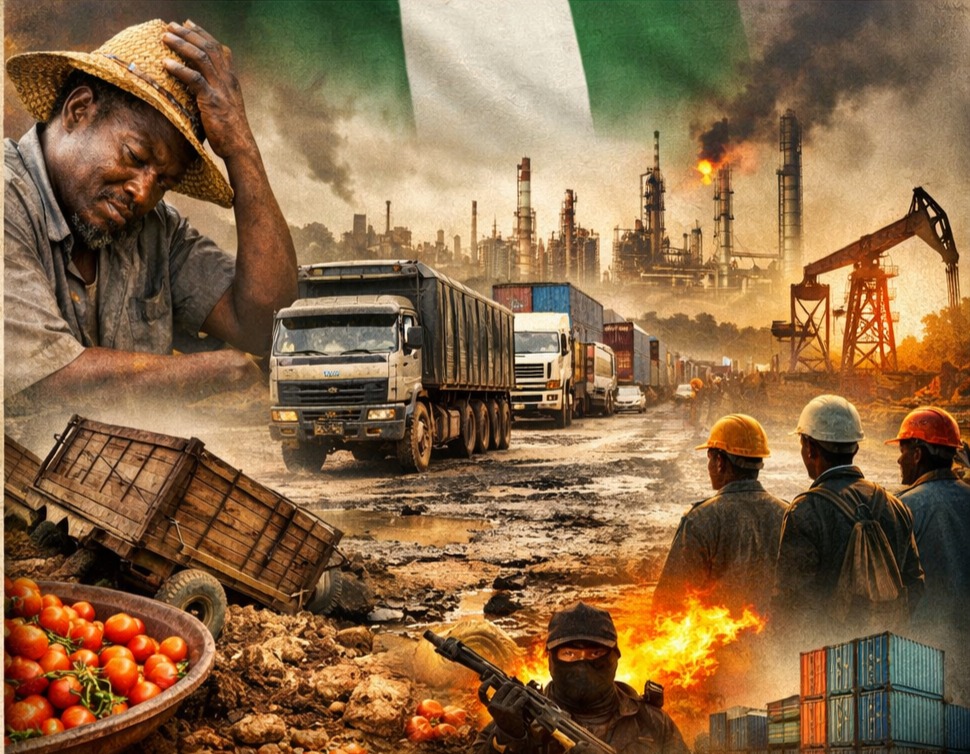
A new report by Rome Business School Nigeria (RBSN) has warned that Nigeria’s economic growth, food security and industrial development are being constrained by weak and fragmented supply chains, even as it identifies vast opportunities for transformation if long-standing challenges are addressed.
Released in January 2026, the report describes Supply Chain Management (SCM) as the largely unseen system that keeps the economy functioning—linking farms to markets, factories to ports, hospitals to suppliers and consumers to essential goods. It estimates that fixing persistent inefficiencies in Nigeria’s supply chains could add between two and three per cent to annual GDP growth, while easing inflationary pressures and creating jobs across key sectors.
According to the report, modern supply chains go far beyond the movement of goods, playing a central role in national development and quality of life.
“Supply chains are the backbone of modern economies,” the report states.
“For Nigeria, strengthening them means better access to food, medicines and jobs, stronger industries and reduced dependence on oil. When supply chains fail, ordinary people feel it immediately; when they work, growth becomes inclusive and sustainable.”
The report traces Nigeria’s supply chain evolution from the colonial era—when economic activity centred on exporting raw materials such as cocoa, palm oil and minerals—to the oil-driven expansion of the 1970s that reshaped trade and logistics around petroleum. While oil and gas still account for about 90 per cent of Nigeria’s foreign exchange earnings, the report notes that these supply chains remain highly vulnerable to theft, vandalism and bureaucratic delays, costing the country billions of naira annually.
Beyond oil, Nigeria exports over $1.5 billion worth of cocoa and sesame each year, yet much of the value is lost due to poor logistics, limited local processing and weak linkages between farmers, processors and exporters. These gaps, the report says, continue to undermine the country’s vast agricultural potential.
Infrastructure deficits remain a major bottleneck. Only a small fraction of Nigeria’s 195,000 kilometres of roads are paved, increasing transport costs by up to 40 per cent and pushing consumer prices up by nearly 30 per cent. Congested ports, unreliable power supply and inadequate cold storage facilities have also resulted in significant post-harvest losses, with up to 40 per cent of perishable crops spoiling before reaching markets.
Security challenges further disrupt the movement of goods, as banditry in the North and vandalism in the Niger Delta frequently endanger logistics workers and inflate business costs. The report also identifies the 2023 removal of fuel subsidies as a major shock that sharply increased transport and logistics costs, contributing to higher prices of essential goods nationwide.
While the COVID-19 pandemic accelerated the adoption of digital tools such as e-procurement and online inventory systems, the report finds that Nigeria still lags in advanced technologies like artificial intelligence and blockchain due to high costs, poor broadband coverage and skills shortages, particularly among small and medium-sized enterprises.
The impact is most severe in agriculture and healthcare. Smallholder farmers often lose large portions of their harvests because poor roads and storage limit access to processors and markets. In the health sector, weak supply chains have led to frequent shortages of essential medicines, including malaria drugs, especially in northern Nigeria, while power outages and weak cold-chain systems damage vaccines and other temperature-sensitive products.
Despite these challenges, the report paints an optimistic outlook. It identifies the African Continental Free Trade Area (AfCFTA) as a major opportunity, projecting that intra-African trade could grow by more than 20 per cent if countries improve logistics, customs processes and infrastructure. Emerging trends such as city-based warehousing, electric delivery vehicles and greener logistics models are also highlighted as ways to cut costs, reduce emissions and support the growth of e-commerce.
Dean and Founder of Rome Business School Nigeria, Prof. Antonio Ragusa, said the country stands at a critical crossroads.
“Nigeria has the resources, the market and the talent,” he said.
“What is needed now is coordinated action to modernise infrastructure, embrace technology and build resilient supply chains that work for businesses and citizens alike.”
The report concludes that strengthening supply chain management is not just a business imperative but a national development priority, stressing that with the right policies, private investment and regional collaboration, Nigeria can unlock new growth, improve food and health security and build a more resilient economy.
About The Author