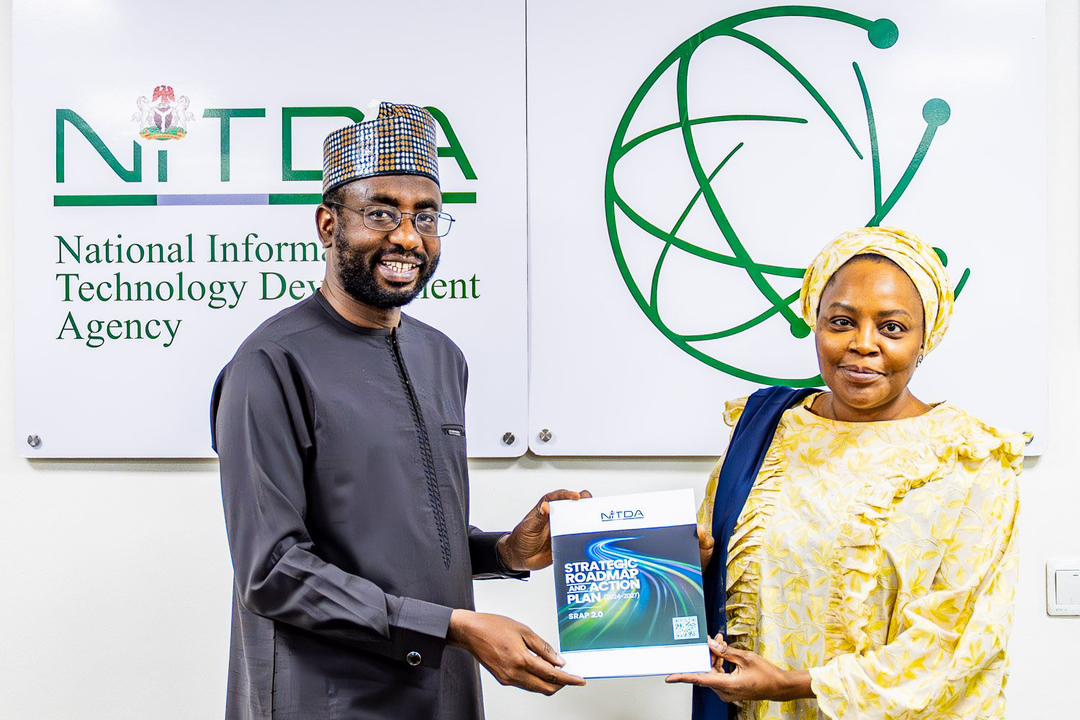
The National Information Technology Development Agency (NITDA) and the Universal Basic Education Commission (UBEC) have reinforced their partnership to accelerate digital literacy and expand access to technology across Nigeria’s basic education system.
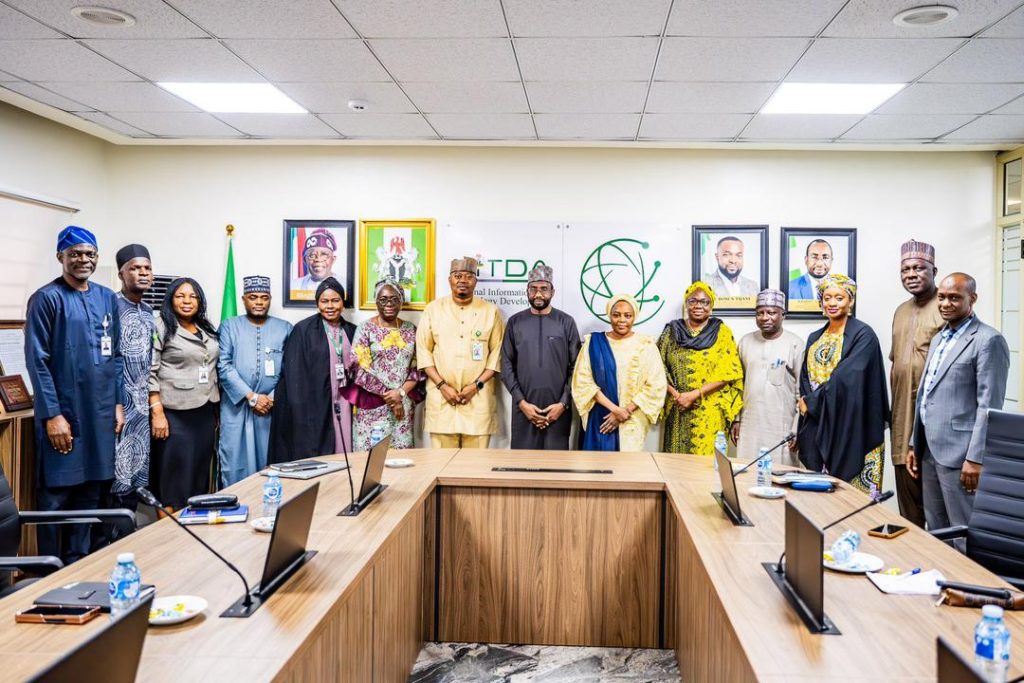
NITDA Director-General, Kashifu Inuwa, reaffirmed the agency’s commitment while receiving the UBEC management team, led by its Executive Secretary, Aisha Garba, during a courtesy visit to the agency’s headquarters in Abuja.
Inuwa described collaboration between the two agencies as critical to achieving Nigeria’s national digital literacy targets, stressing that the broader objective must prioritise learners while sustaining teacher capacity development.
“For us, partnering with you will help us achieve more in terms of reaching all students in basic education,” he said, noting that while significant progress has been made in training teachers, measurable impact must focus on the number of students reached.
“We have achieved a lot in training teachers, but impact must be measurable. We need the numbers. How many students are being reached?” he asked, reiterating NITDA’s digital literacy targets of 70 per cent by 2027 and 95 per cent by 2030.
He underscored the importance of leveraging data, artificial intelligence and analytics to track progress nationwide. According to him, a structured system should make it possible to monitor each trained teacher and determine how many students they are impacting.
On infrastructure, Inuwa disclosed that NITDA has deployed over 1,500 digital learning centres nationwide under its strategic pillar on inclusive access to digital infrastructure and services. While some centres are optimally utilised, he noted that others remain underused, calling for improved coordination and data sharing between both agencies.
“We want every Nigerian to have access to digital infrastructure and services,” he said, proposing that NITDA and UBEC map their interventions and complement each other’s efforts to maximise impact.
Addressing internet connectivity challenges in schools, he called for sustainable models to expand broadband access, stressing that connectivity remains key to unlocking the full potential of digital learning facilities.
Beyond digital literacy and infrastructure, the NITDA DG offered to share the agency’s digital transformation playbook with UBEC to support institutional reforms within the Commission.
“Digital transformation is a journey. It is not a one-off initiative. At each stage, when you reach your target, you need to set a new one,” he said.
He cited NITDA’s internal AI transformation roadmap, which included training staff on Generative AI and encouraging them to develop innovative use cases to enhance productivity.
“AI is not here to replace people. If a junior staff member can transition from moving files to managing an AI system, I believe anyone can embrace and use AI,” he added.
In her remarks, Garba described the partnership with NITDA as both strategic and essential to fulfilling the Commission’s mandate of ensuring universal access to basic education.
“For us in UBEC, our key mandate is universal access to basic education for all Nigerian children. So, it’s a big responsibility,” she said, noting that the Commission cannot achieve its goals alone.
She revealed that over 47 million children are currently within Nigeria’s basic education system, underscoring the scale of the challenge.
Garba also expressed appreciation for the NITDA Director-General’s continued support, reaffirming UBEC’s commitment to working closely with the agency to strengthen digital inclusion across Nigeria’s schools.
About The Author