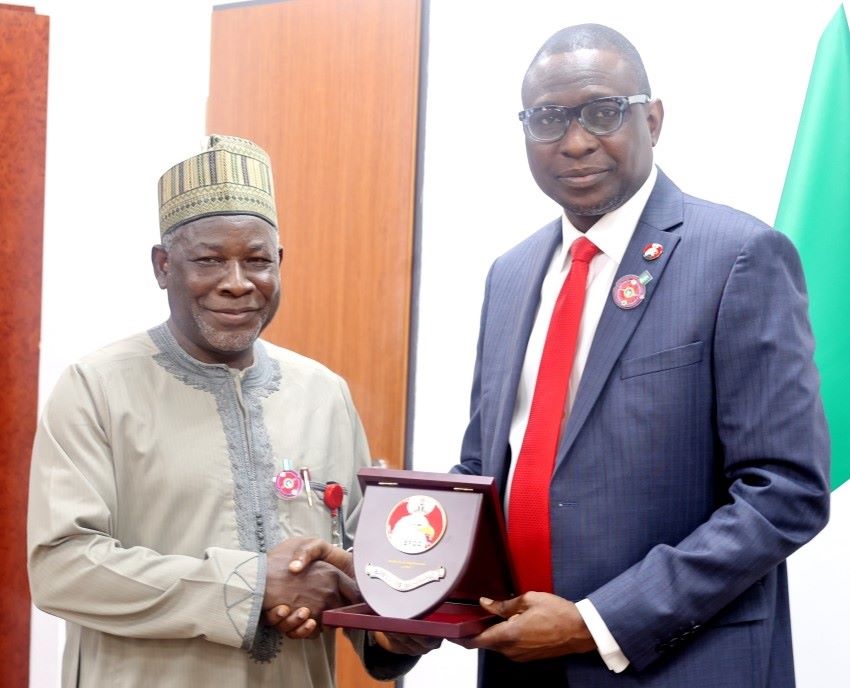
The Executive Chairman of the Economic and Financial Crimes Commission (EFCC), Mr. Ola Olukoyede, has called on the newly appointed Managing Director and Chief Executive Officer of the North West Development Commission (NWDC), Professor Shehu Abdullahi Ma’aji, to aggressively pursue the Commission’s development mandate while ensuring strict adherence to accountability and transparency.
Olukoyede made the call on Wednesday, January 14, 2025, when Ma’aji led a delegation of NWDC officials on a courtesy visit to the EFCC’s corporate headquarters in Jabi, Abuja.
Emphasising the importance of regional intervention agencies, the EFCC boss noted that such commissions were established to enable accelerated development across Nigeria’s geopolitical zones. He urged the NWDC leadership to demonstrate a visible impact within a short period, particularly after budgetary allocations are released.
According to him, Nigerians expect tangible projects that will justify the trust reposed in the Commission. He stressed that accountability and transparency must remain central to the operations of the NWDC from inception, describing prevention as the most effective approach to combating corruption.

In a statement by the Head, Media and Publicity, EFCC, Dele Oyewale, the EFCC boss further advised Ma’aji to exercise due diligence in constituting his management team, especially in key areas such as procurement, noting that the responsibility for all financial decisions ultimately rests with the chief executive. He assured the NWDC of EFCC’s willingness to collaborate in a preventive and advisory capacity to ensure the Commission maintains a strong and credible foundation.
In his response, Ma’aji underscored the NWDC’s commitment to integrity-driven governance and sought a strategic partnership with the EFCC to help guide its operations. He explained that the Commission was established to drive coordinated socio-economic development across the North West through infrastructure delivery, social interventions, economic empowerment and institutional strengthening.
He acknowledged that the NWDC, as a new public institution entrusted with significant public resources, must prioritise transparency, robust internal controls and compliance systems to sustain public confidence and deliver value for money.
Ma’aji described the proposed collaboration with the EFCC as a preventive, capacity-building partnership aimed at ensuring sound financial management and insulating the Commission from financial misconduct and reputational risks.
Highlighting the scale of the task ahead, he noted that the NWDC serves seven states in the North West, with a population of about 54 million people, including a large youth demographic that requires productive engagement.
He clarified that the Commission was not designed to compete with state or local governments but to intervene where development gaps exist, adding that effective partnerships and strong governance structures would be critical to achieving its mandate.
About The Author