The Federal Government has set an ambitious target of achieving 95 per cent digital literacy nationwide by 2030, as part of broader reforms to modernise the public service and accelerate national development.
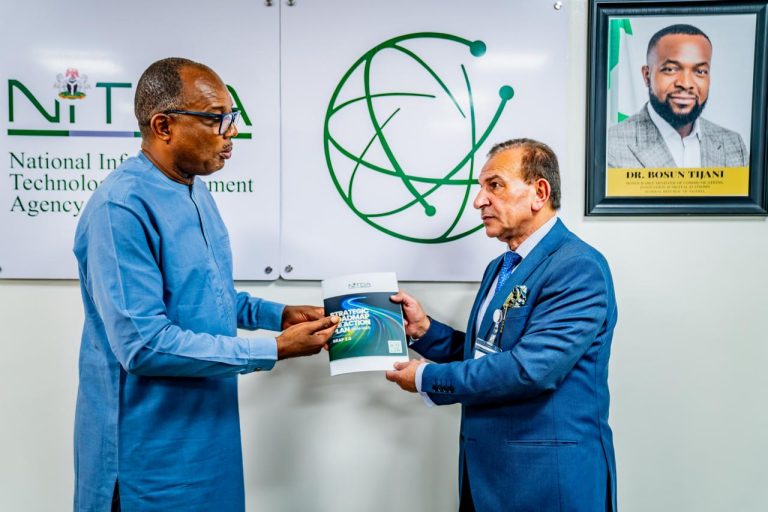
The Director General of the National Information Technology Development Agency (NITDA), Kashifu Inuwa, disclosed this at the Digital Literacy for All (DL4ALL) training awards programme, where he reiterated the government’s commitment to strengthening digital capacity across the civil service. He noted that the country has a mid-term target of 70 per cent digital literacy by 2027.
According to Inuwa, the DL4ALL initiative was introduced to equip civil servants with essential digital skills required for effective service delivery, transparency, and improved governance. Implemented in collaboration with the Office of the Head of the Civil Service of the Federation, the programme initially faced operational challenges, including limited access to official email accounts, which were resolved through coordinated institutional efforts.
Providing an update on progress, the NITDA Director General disclosed that 54,377 civil servants have enrolled in the programme, representing nearly 79 per cent participation, while over 40 per cent have completed their courses. To encourage completion and practical application of digital skills, incentives—including the presentation of laptops—were introduced.

Inuwa emphasised that digital competence is no longer optional but essential for professional relevance and national capacity development, adding that strengthening digital skills within the public service is central to Nigeria’s broader digital transformation agenda.
Also speaking at the event, the Head of the Civil Service of the Federation, Mrs. Didi Esther Walson-Jack, described the awards programme as an opportunity to recognise outstanding performance and assess progress toward building a digitally enabled public service.
She stated that digital competence has become a strategic requirement for productivity and governance, noting that the DL4ALL initiative guarantees inclusive access to digital skills across ministries, departments, and agencies.
Mrs. Walson-Jack further disclosed that plans are underway to transition ministries and extra-ministerial departments to paperless operations by December 2025, stressing the need for continuous upskilling to meet evolving administrative demands.
She announced the recognition of 35 officers for exceptional performance and encouraged broader participation across all cadres to further strengthen institutional capacity.
Both speakers reaffirmed the Federal Government’s commitment to embedding digital literacy into ongoing public sector reforms, with NITDA pledging sustained efforts to promote digital inclusion, enhance capacity development, and support Nigeria’s transition to a knowledge-based economy.
About The Author