The Nigeria Deposit Insurance Corporation (NDIC) has expressed its desire to strengthen collaboration with the Economic and Financial Crimes Commission (EFCC) in furtherance of its mandate to safeguard Nigeria’s financial system.
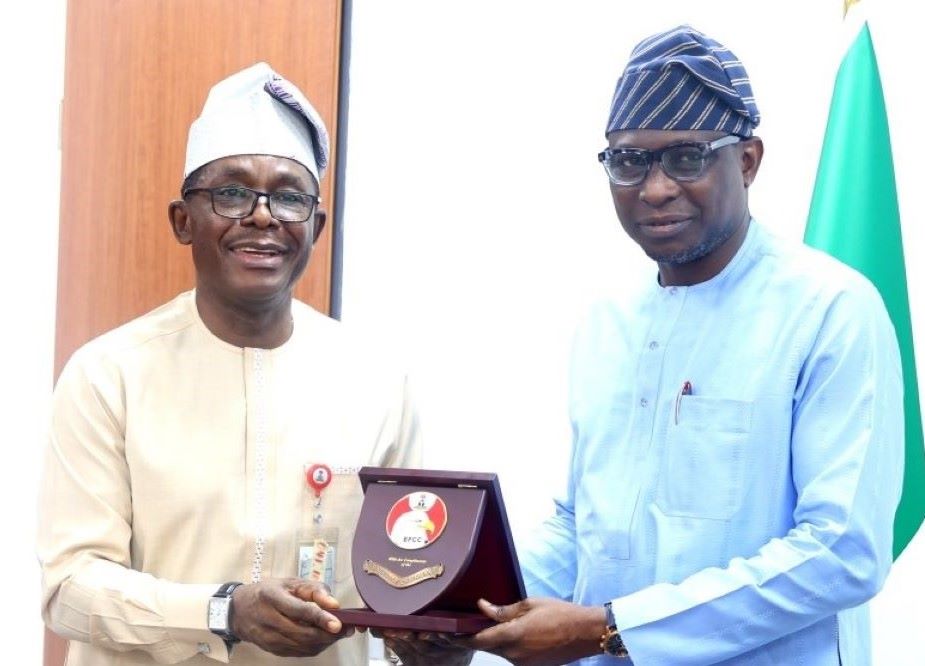
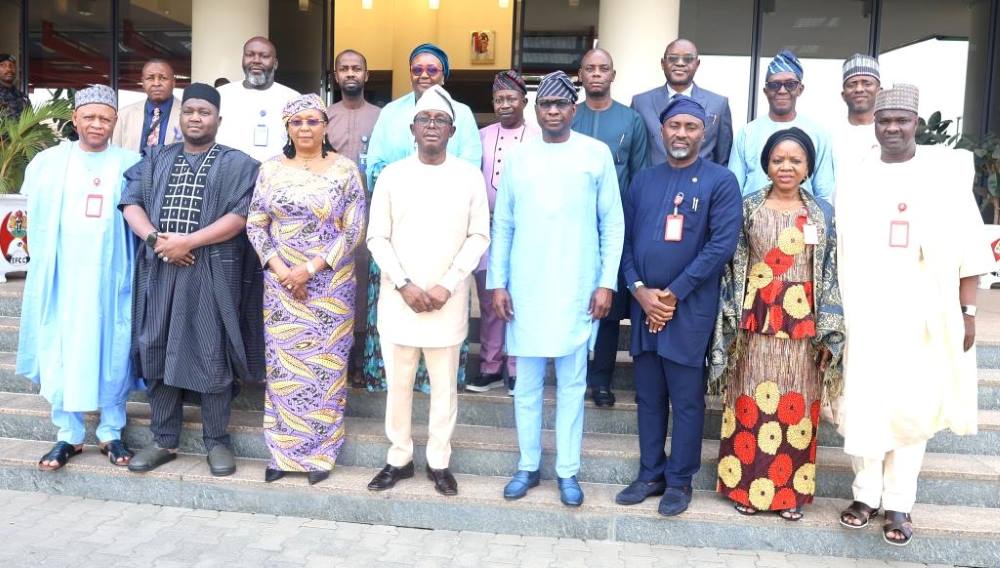
The call was made on Friday, January 23, 2026, when the Managing Director and Chief Executive Officer of the NDIC, Mr. Thompson Oludare Sunday, led a management delegation on a courtesy visit to the Executive Chairman of the EFCC, Mr. Ola Olukoyede.
Speaking during the visit, Sunday described the engagement as an opportunity to deepen institutional synergy and explore new areas of cooperation between both agencies in the interest of national financial stability.
“We aim to further strengthen our collaboration, deepen institutional synergy and explore additional avenues for mutual support in the pursuit of stability within Nigeria’s financial system. The EFCC has been our long-standing partner, and we want this relationship to continue and grow even stronger,” he said.
He noted that the NDIC seeks to leverage the EFCC’s technical expertise in asset tracing, recovery, and management, particularly in cases involving debtors of banks in liquidation. According to him, closer collaboration in this area would significantly enhance recovery efforts and accountability within the banking sector.
Sunday also highlighted the NDIC’s statutory responsibility to prosecute individuals whose actions contribute to bank failures, stressing the need for sustained cooperation with the EFCC in addressing such cases effectively.
In his response, Olukoyede reaffirmed the long-standing partnership between both institutions and pledged to further strengthen their working relationship. He described the NDIC and EFCC as long-time partners whose collaboration has been mutually beneficial over the years.
“The NDIC and EFCC are like inseparable twins. We have worked together for years. While the EFCC has supported the NDIC in investigations, the NDIC has also supported us in the area of training. This mutually beneficial relationship will not only continue but will be taken to a higher level,” he assured.
The EFCC Chairman further explained that his leadership is committed to deploying the anti-corruption mandate of the Commission as a tool for economic stimulation, capacity building, and institutional strengthening across government agencies.
“One of the promises I made upon assumption of office was to use this work to stimulate the economy—not just to make noise, but to strengthen internal processes of productive institutions and design fraud risk assessments for them,” Olukoyede said.
He added that the establishment of the EFCC’s Fraud Risk Assessment and Control Department was aimed at preventing financial crimes before they occur by working proactively with key stakeholders to strengthen systems and safeguard the nation’s financial ecosystem.
The meeting reaffirmed the shared commitment of the NDIC and EFCC to collaboration, prevention-focused enforcement, and the promotion of confidence in Nigeria’s financial system.
About The Author