From scrutiny to stature, how Nigeria’s financial intelligence unit is reshaping the global fight against illicit finance.
By Ikechi Enwereji
In the battle against financial crime, the most decisive victories are rarely loud. They happen in closed meetings, encrypted systems and carefully negotiated partnerships—far from public view. Yet in January, under the soft skies of Arusha, Tanzania, Nigeria’s quiet transformation became impossible to ignore.
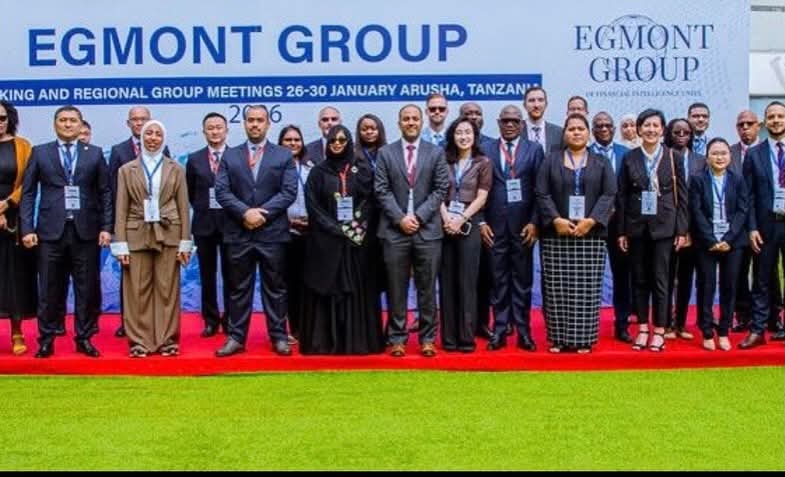
At the 26th Egmont Group Annual Meetings, where more than 400 Financial Intelligence Units (FIUs) from across the world convened to confront money laundering, terrorist financing and illicit financial flows, the Nigerian Financial Intelligence Unit (NFIU) was no longer just another delegation. It was a voice others listened to.
For a country that, not long ago, grappled with global scrutiny over its Anti-Money Laundering and Counter-Financing of Terrorism (AML/CFT) framework, the moment marked a turning point. Nigeria was not merely reporting progress—it was helping to shape the conversation.
Led by the Chief Executive Officer of the NFIU, Hafsat Abubakar Bakari, Nigeria’s delegation engaged deeply across Working Group and Regional Group sessions, contributing to discussions on secure information exchange, emerging financial crime risks and the role of technology in staying ahead of criminal networks. The engagements reflected a broader recalibration of Nigeria’s standing within the Egmont Group—from compliance-driven participation to strategic leadership.
That shift became unmistakable when two NFIU officials were elected into senior leadership positions within the Egmont Group’s operational structure. The Unit’s General Counsel, Mr Felix Obiamalu, was elected Vice Chairman of the Membership, Support and Compliance Working Group, while Mr Nnanyelugo Aham-Anyanwu was appointed Vice Chairman of the Information Exchange Working Group. In an ecosystem where trust is currency, such elections signal peer confidence in Nigeria’s institutional maturity and technical credibility.
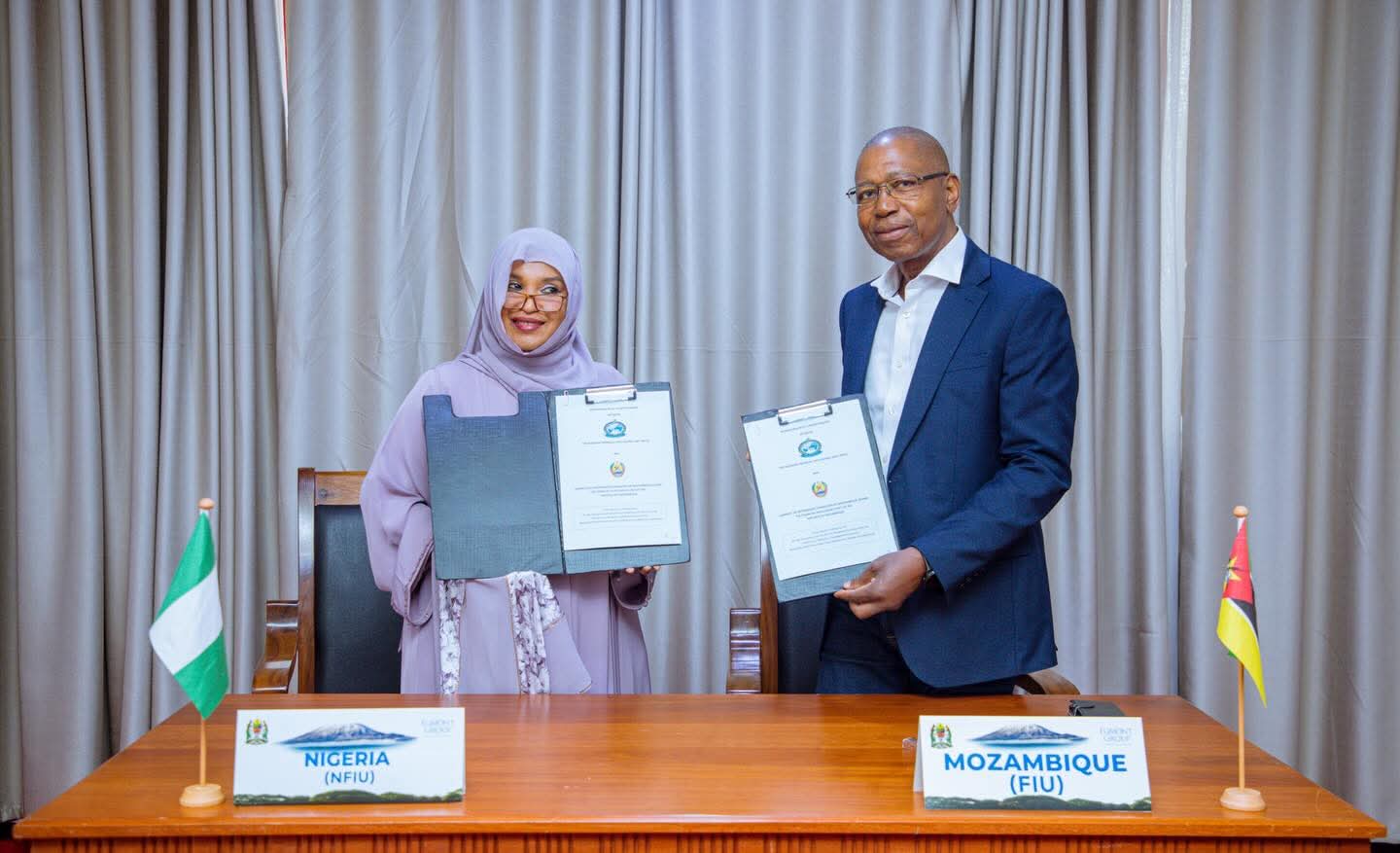
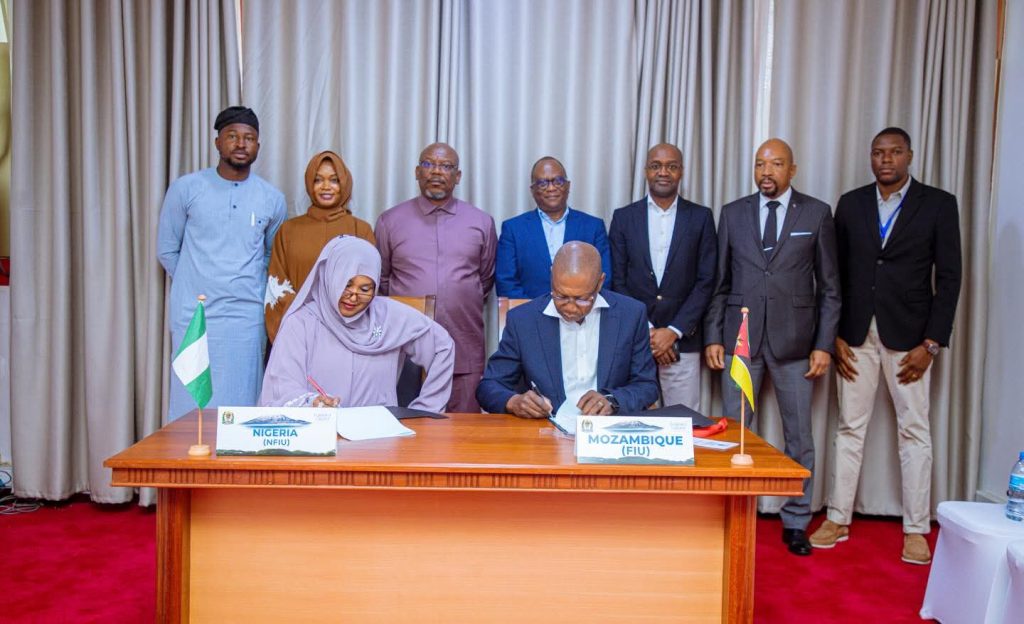
But Arusha was not only about elections and plenary sessions. It was also about relationships—carefully built and deliberately strengthened. On the margins of the meetings, Nigeria and Mozambique formalised a partnership that speaks to the power of shared reform journeys. The NFIU and the Financial Intelligence Unit of Mozambique signed a Memorandum of Understanding aimed at strengthening training, capacity building, bilateral information exchange and operational collaboration against illicit financial flows.
The symbolism was striking. Both countries have recently been removed from the Financial Action Task Force (FATF) Grey List—a recognition of sustained national reforms and improved AML/CFT frameworks. The MoU was not a victory lap; it was a declaration that reform is a process, not an event, and that progress must be safeguarded through collaboration and peer learning.
These engagements also reinforced a broader pattern of South–South cooperation, with cross-regional exchanges involving FIUs from West and Central Africa. The conversations echoed familiar challenges—rapidly evolving financial crime threats, the pressures of digitalisation, and the constant need for secure and trusted information sharing. But they also reflected a growing sense of collective responsibility among African FIUs to learn from one another and act together.
Back home in Abuja, the NFIU has been forging partnerships that reflect a broader understanding of financial integrity—one that extends beyond government institutions. A recent strategic collaboration with the Africa Network for Environmental and Economic Justice (ANEEJ) signals a deliberate move to align financial intelligence with civil society’s transparency and accountability agenda.
Formalised at the NFIU headquarters, the partnership focuses on tackling illicit financial flows, money laundering and terrorist financing, while strengthening asset recovery efforts. Representing the NFIU CEO at the signing, the Unit’s Chief of Staff, Mohammed Ahmed, pointed to Nigeria’s delisting from the FATF Grey List and the European Union’s enhanced monitoring framework as evidence that reform is delivering results. But he also sounded a note of caution: sustaining those gains will require collective ownership.
His call to the private sector and non-profit organisations underscored a central truth of modern financial crime enforcement—no single institution can do it alone.
For ANEEJ, the partnership reflects confidence in the NFIU’s trajectory. Leading the organisation’s delegation, Mr Atakpu Leo praised the Unit’s pivotal role in Nigeria’s recent progress and emphasised ANEEJ’s readiness to support capacity building and asset recovery initiatives.
Taken together, these developments point to a deeper narrative: Nigeria is no longer defined by where it was, but by where it is positioning itself. From leadership roles within the Egmont Group, to South–South cooperation with fellow reforming nations, and strategic alliances with civil society, the NFIU is embedding Nigeria into the architecture of global financial security.
In a world where illicit funds move at the speed of technology and borders are increasingly porous, Nigeria’s experience offers a lesson in quiet resilience. Reform, when sustained and supported, can translate into influence. And influence, when responsibly exercised, can help reshape the global fight against financial crime.
For the NFIU, the work continues—methodical, collaborative and largely unseen. But as Arusha revealed, the world is watching.
About The Author