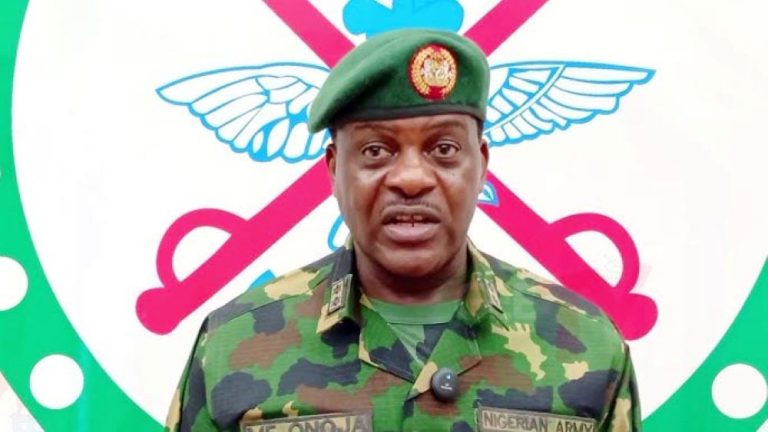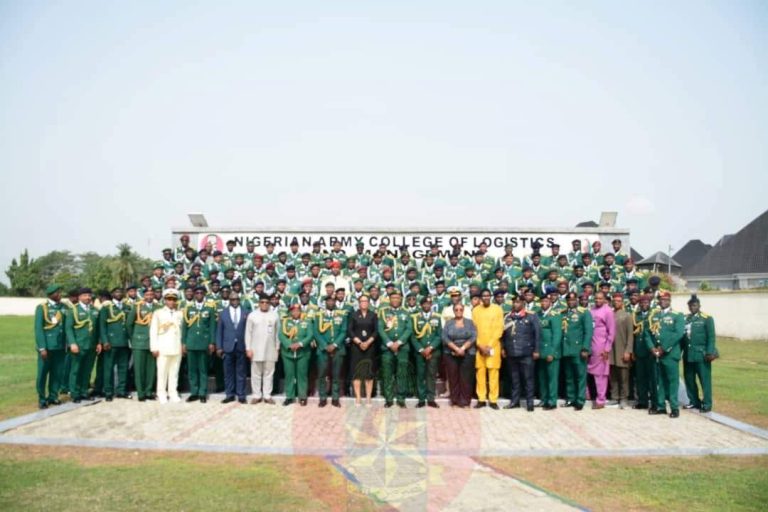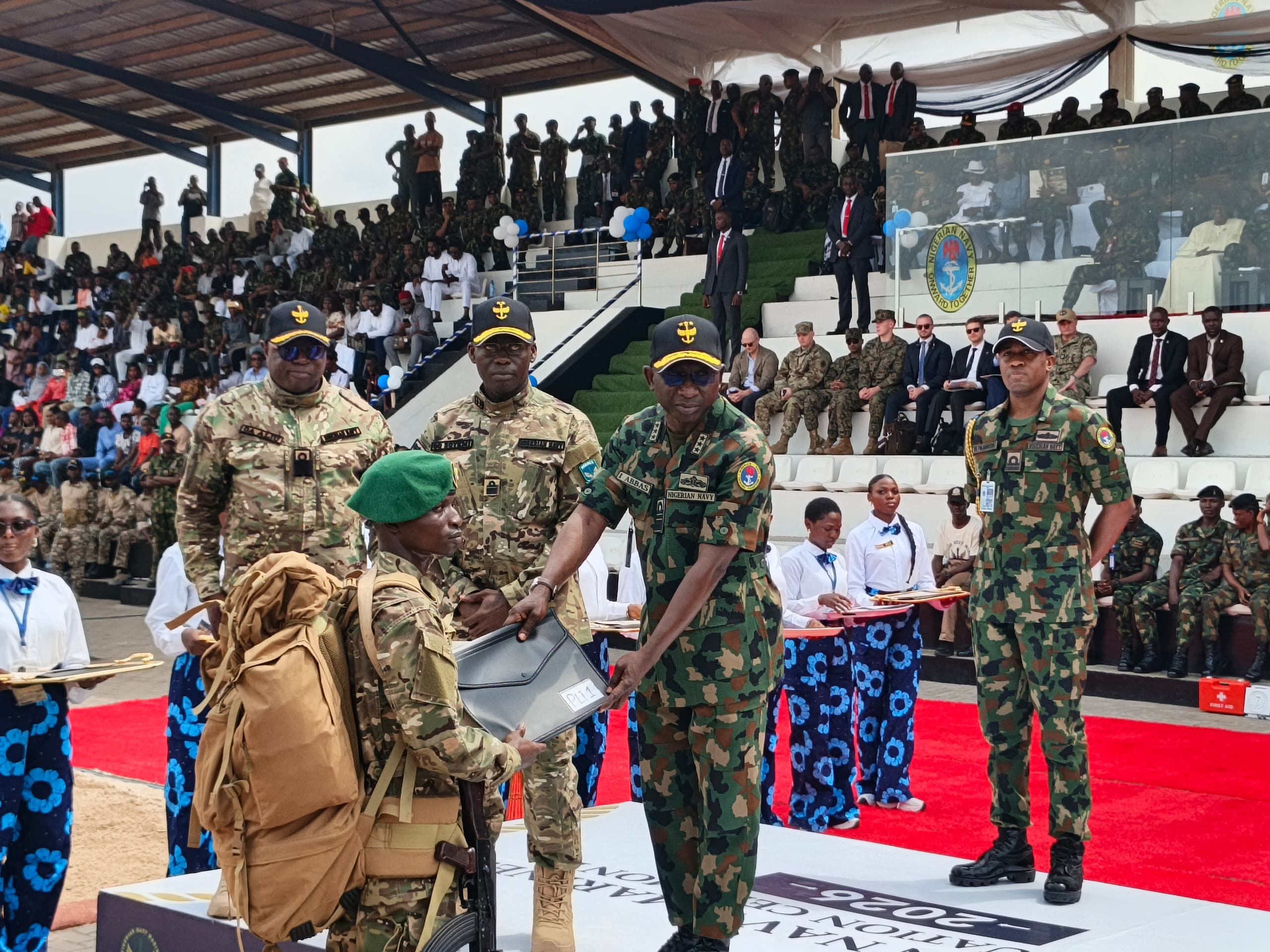
In what would be described as a reinvigorated efforts to recalibrate the maritime security architecture and deal with the nuisance value of criminal gangs within the domain, the Nigerian Navy has taken a quantum lip by injecting newly graduated Basic Marines Course 1 into the elite Marine Corps of the service.
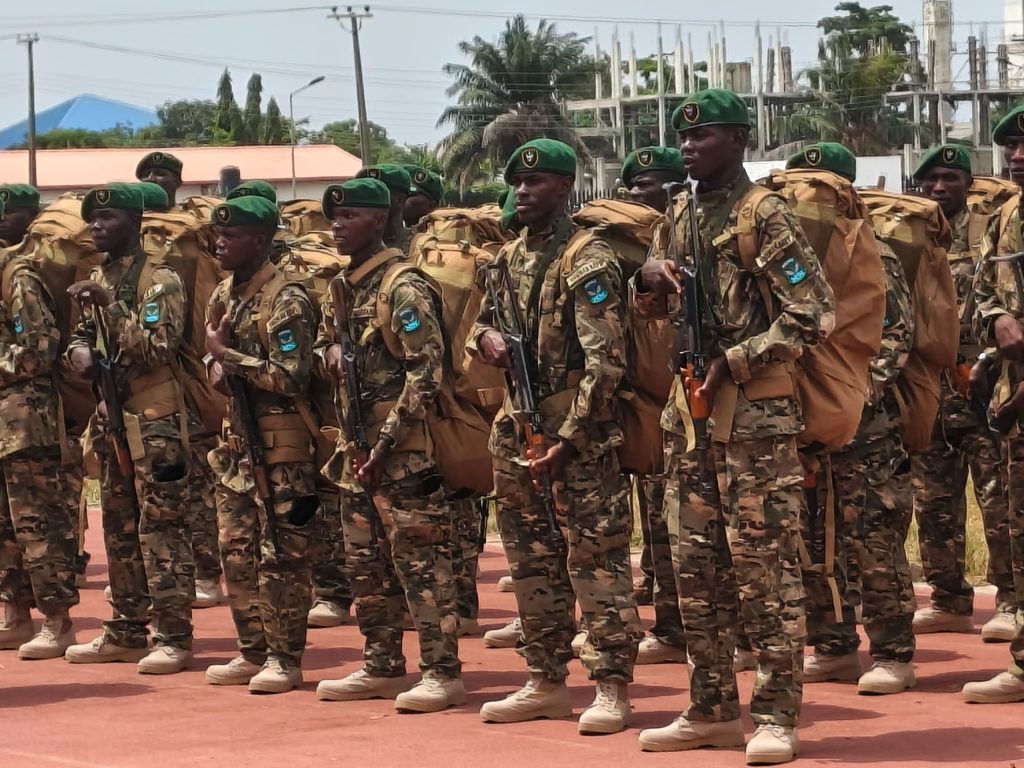
Graduating the course on Friday, 27th February, 2026, at the Nigerian Navy Sports Complex, Navy Town, Ojo, marks a completion of a training module; which signaled a doctrinal shift in Nigeria’s maritime and amphibious security architecture.
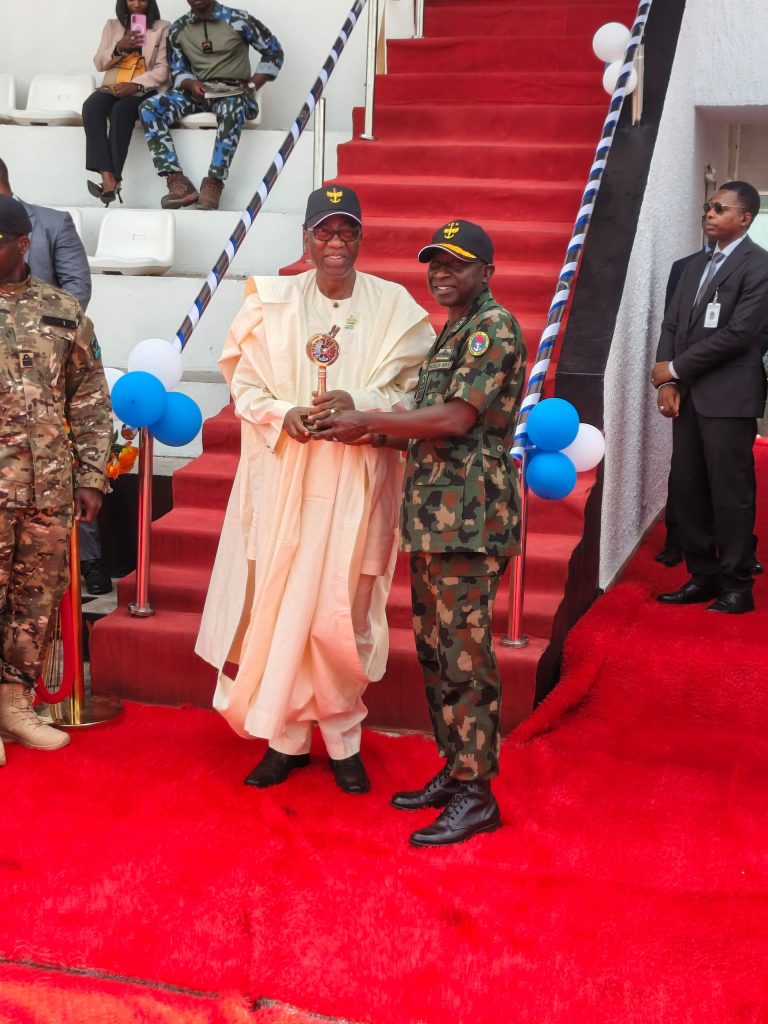
The Chief of Defence Staff (CDS), General Olufemi Olatubosun Oluyede, who was the Special Guest of Honour, declared creation of the Marines would shrink the operational gaps between land and sea, equipping the Navy to confront both conventional and asymmetric threats.
With a galaxy of international dignitaries and top brass of the Nigerian military and civilians gracing the occasion, it underscored the strategic weight attached to the birth of Nigeria’s first Marine Corps under the naval structure.
Among them were the Chief of the Naval Staff (CNS), Vice Admiral Idi Abbas, Senate Committee on Navy Chairman, Otunba Gbenga Daniel, and U.S. Chargé d’Affaires Keith Heffern, alongside senior military officers, serving and retired and defense attachés.
According to the Chief of Defence Staff, General Oluyede, said the graduation is a decisive milestone in Nigeria’s effort to secure its maritime domain, particularly within the volatile Gulf of Guinea (GoG).
He emphasized Nigeria’s geostrategic position and the constitutional obligation of the Armed Forces to safeguard territorial waters, oil and gas assets and coastal communities.
He commended the continuity of naval leadership that advanced the initiative and urged them to sustain inter-agency collaboration, discipline and intellectual agility among the graduates, whose actions, he stressed, would carry strategic implications for national security.
The CDS said Nigeria’s strategic location within the Gulf of Guinea imposes an obligation to safeguard vital sea lines of communication, oil and gas infrastructure and coastal communities whose livelihoods depend on maritime stability.
He stressed that protecting national sovereignty and economic assets remains a constitutional duty of the force.
The Chief of the Naval Staff, Vice Admiral Idi Abbas, on his part, described the Marines as a product of the Navy’s Special Operations Command, established to deliver precision capability across maritime, riverine, littoral and inland theaters.
He outlined the broader security environment defined by terrorism, maritime crime, kidnapping and violent extremism, arguing that the Marines represent an adaptive response to evolving threats.
Designed as a mobile and versatile force, the unit is expected to work in synergy with the Navy’s Special Boat Service and other special forces, while benefiting from sustained cooperation with international partners.
Admiral Abbas further reaffirmed institutional commitment to equipping and positioning the Marines as a combat-ready force capable of decisive operational impact.
The Nigerian Navy Marines (NNM) was formally established on 1st June 2025 in line with the Nigerian Navy Transformation Agenda, and as a strategic initiative to enhance the Nigerian Navy’s capability in expeditionary, amphibious, and littoral warfare operations in support of national security objectives.
According to the Commandant, Nigerian Navy Marines Training Centre, Commodore Olayinka Ayodele Aliu said that the elite corps serve as a highly trained light infantry and special operations-capable force within the Nigerian Navy, with members of this elite force codenamed the “Bushmen.”
The Basic Marines Qualifying Course 1 commenced on the 14th August, 2025 as a 6-month intensive training programme structured to transform selected personnel into combat-ready Marines capable of operating in joint and multi-domain environments.
Highlighting the course, Cdre Olayinka Aliu detailed curriculum that spanned endurance conditioning, amphibious maneuvers, jungle and land warfare exercises in Ogun State, marksmanship, close-quarters battle, survival skills and multi-domain integration.
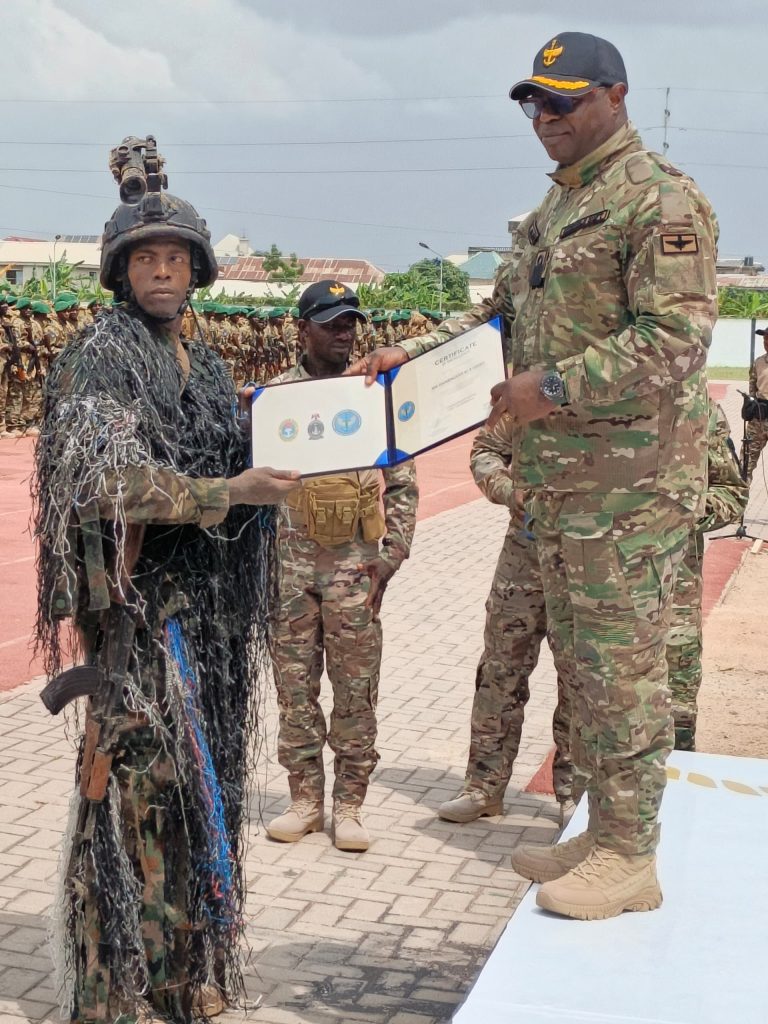
The ceremony culminated in a tactical demonstration, a videographic review of the training cycle, formal induction into the Navy’s Special Operations Forces and the presentation of certificates and Marine insignia, with special awards recognizing outstanding performance.
About The Author