Nigeria has emerged as a key driver of the global digital transformation agenda, unveiling a comprehensive strategy to localise commitments under the World Summit on the Information Society (WSIS+20) framework.
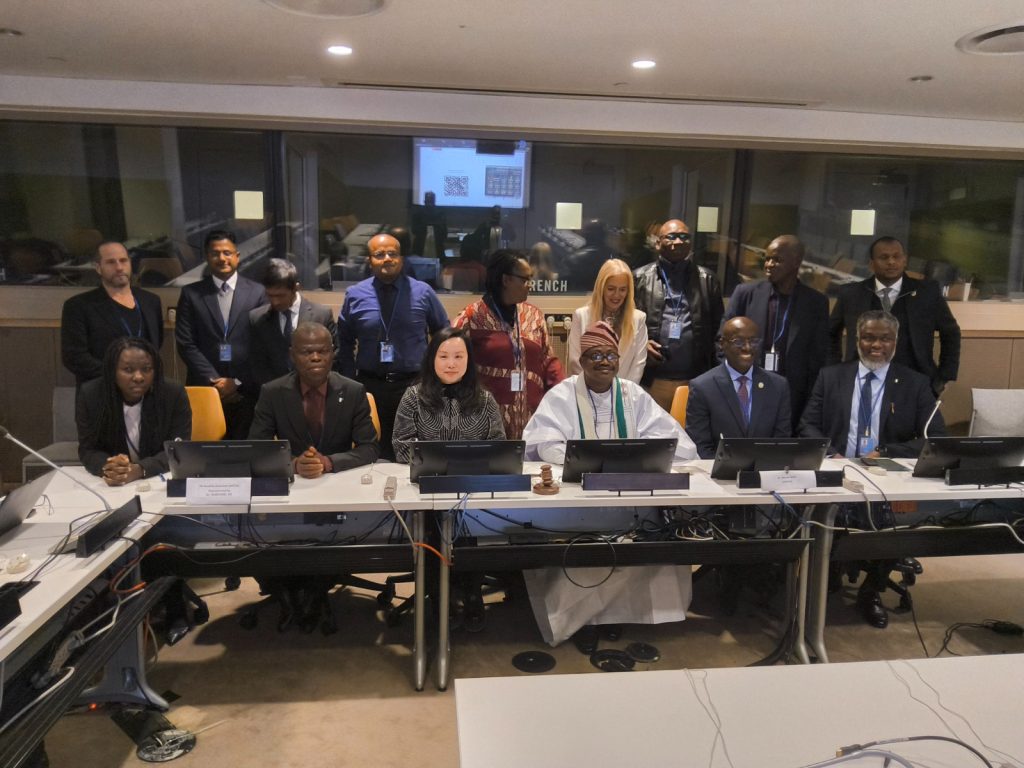
The multi-pronged roadmap, which prioritises digital infrastructure development, inclusive internet governance, and strengthened cybersecurity, was unveiled in New York at a high-level Nigerian side event titled “Re-Imagining Digital Cooperation for Sustainable Development: From WSIS+20 Vision to Local Action.”
The initiative positions Nigeria as a leading voice in shaping the future of global digital cooperation, with a strong emphasis on translating international commitments into measurable national outcomes through deep collaboration with key stakeholders.
Speaking at the event, the Director General of the National Information Technology Development Agency (NITDA), Kashifu Inuwa, CCIE—represented by the Director of Corporate Planning and Strategy, Dr. Dimie Shively Wariowei—said Nigeria’s approach is deliberately aligned with the four core activity areas identified under the ongoing WSIS+20 review process.
According to him, the strategy provides a practical framework for converting global digital resolutions into tangible national outcomes, ensuring that international commitments drive inclusive growth and sustainable digital development at the country level.
Inuwa identified digital infrastructure as the foundation of effective localisation, noting persistent challenges in extending connectivity to underserved and remote communities. He also highlighted affordability constraints and digital literacy gaps as major barriers to digital inclusion.
He explained that government alone cannot shoulder the responsibility of nationwide digital infrastructure deployment due to Nigeria’s vast geographical spread, hence the adoption of Public-Private Partnership (PPP) models. He disclosed that Nigeria, in collaboration with the World Bank, is implementing a nationwide fibre-optic project covering approximately 90,000 kilometres to boost connectivity.
The NITDA Director General further revealed that the current National Broadband Plan is nearing completion, with plans underway to renew and reposition it for the next five years. The renewed plan, he said, will strategically target increased broadband penetration as a catalyst for digital access and economic growth.
On internet governance, Inuwa referenced Nigeria’s active participation in the Internet Governance Forum (IGF), noting that the country has successfully hosted its national IGF using a multi-stakeholder model that brings together government, the private sector, civil society, and the technical community to foster cooperation and informed policy dialogue.
Cybersecurity, he added, remains a critical pillar of Nigeria’s localisation efforts. He cited the existing Cybersecurity Act and ongoing moves to strengthen the legal framework through a reviewed version currently awaiting legislative approval. These measures, he said, are designed to mitigate risks associated with increased internet usage and protect users and critical digital infrastructure.
Inuwa also underscored Nigeria’s ambition to play a leadership role in advancing digital cooperation across Africa through inclusive, multi-stakeholder engagement. He stressed the importance of coordinated national data collection, noting that reliable, country-specific data is essential for tracking progress and presenting Africa’s digital development narrative on the global stage.
Stakeholders at the event commended Nigeria’s growing influence in the digital space and its commitment to shaping Africa’s digital future.
Earlier, Ms. Jennifer Chung, Co-Convener of the Informal Multi-Stakeholder Sounding Board (IMSB), praised Nigeria for convening a broad-based, multi-stakeholder delegation and for its commitment to the meaningful implementation of WSIS+20 outcomes.
Chung emphasised the growing demand for localised WSIS follow-up mechanisms, noting that platforms such as the annual IGF, National and Regional IGF Initiatives, and youth-led forums are critical for tracking progress toward the 2030 Agenda and Africa’s Agenda 2063.
She described the WSIS+20 review as a crucial step toward effective monitoring, reliable data collection, and evidence-based evaluation, particularly for developing countries in the Global South. According to her, these measures are essential to achieving WSIS targets and ensuring that no region is left behind.
Drawing parallels with the Asia-Pacific region, Chung noted that challenges around affordable and meaningful connectivity remain widespread across developing economies. She stressed that expanding broadband penetration and reducing the cost of access are vital to closing digital divides in Africa, Asia-Pacific, and other parts of the Global South.
She also highlighted the need to enable active citizen participation in emerging technologies, including artificial intelligence and future innovations such as quantum technologies, emphasising that inclusive digital access is key to maximising the benefits of digital transformation.
About The Author